A fundamental principle of product development is simple: the earlier an error is identified, the less expensive it is to correct. Yet many projects move forward without a proper concept development phase, only to discover later that they have been heading in the wrong direction. Time pressure, budget constraints, and the desire to “start doing” can easily lead teams to begin detailed design too soon.
The purpose of concept development is to clarify ideas, test possibilities, and define constraints before implementation. Without this foundation, a solution may be technically ambitious yet offer little value to the user.
Ideation Is Not the Same as Concept Development
Ideation is important, but ideas alone do not constitute a concept. Concept development creates a comprehensive understanding of what is being created, for whom, and why.
A strong concept does not emerge from ideas alone. It may also show that a project should not be pursued at all. In that case, concept development has done its job: it has prevented unnecessary design work and saved resources at an early stage.
A Concept Guides Decisions and Prevents Mistakes
A sound concept serves as the project’s compass. It guides decisions, supports prioritization, and keeps development on course. When the direction is clear from the outset, guesswork, constant changes in direction, and costly redesign can be avoided. The early stages offer the greatest opportunity to influence the outcome with limited resources: concept development creates space to test bold ideas, identify risks, and correct mistakes before they become permanent. Patience at the beginning pays for itself many times over—even excellent design cannot correct work that has proceeded in the wrong direction.
Concept Development Is Systematic, Not Accidental
The strongest concepts are created by experienced multidisciplinary teams. An external, innovative partner brings a fresh perspective and constructive challenge to the process. Concept development is not guesswork; it is a structured, step-by-step process that produces the information needed for informed decisions and provides a well-founded direction for further development.
What Does a Strong Concept Development Phase Include?
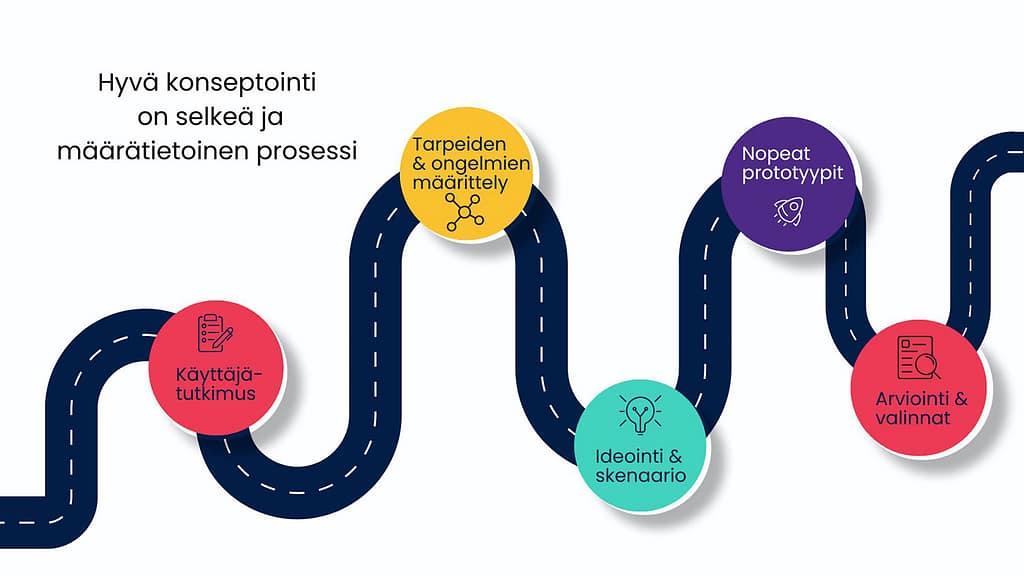
Good concepting is a clear and purposeful process that can include, for example:
- User research: who is this actually being made for?
- Defining needs and problems: what should actually be solved?
- Ideation and scenarios: what different directions could be explored?
- Rapid prototypes: how could the solution look and feel in practice?
- Evaluation and choices: what works, what doesn’t?
“A strong concept does not emerge from ideas alone. It may also show that a project should not be pursued at all. In that case, concept development has done its job: it has prevented unnecessary design work and saved resources at an early stage.”
Concept Development Is a Design Superpower
Concept development is neither a bottleneck nor bureaucracy—it is a design superpower. It clarifies the direction, prevents mistakes, and creates the foundation for a solution that works both technically and from the user’s perspective.
Design should not be rushed. Good design cannot correct a project that is heading in the wrong direction, but strong concept development can prevent the mistake before it happens.
Investing in the early stages always pays for itself.

To make our customers’ development work easier, we have created tailored, ready-made service packages as development starter kits.
These packages can be used as tools for product, service, and technology development.
Let’s find the methods that suit your specific needs.